 Tulum Cenotes
Cenotes Near Tulum Without a Tour: Can You Do It Yourself?
Last reviewed September 2026
You can visit cenotes without a tour near Tulum, and for the open ones it is straightforward: they sell entry at a window, colectivos run past the gates, and two of the best known sit within five kilometres of town on the Coba road. The exceptions are the caves, which are sold with a guide or not at all. This page prices a do-it-yourself day for two people, sets out how to reach each cenote, and says plainly where a booked Tulum cenotes tour earns its money.
Quick answer Short answer, the line-item costs, and the cenotes no ticket lets you enter alone
Yes for most cenotes, no for the caves: two people with a bit of patience can do a proper cenote day for around MX$1,100 to MX$1,300 between them, because the open cenotes near Tulum sell plain entry at a window and a colectivo gets you within walking distance of the best-known ones. What you cannot do alone at any price is swim the cave systems: Sac Actun's cave sections are guided-access only, and inside Parque Dos Ojos the Misterio Maya and Monos caverns are sold as MX$1,200 guided tours and explicitly not as free-swim entry. The crossover point is transport — solo or in a pair without a car, the arithmetic gets close.
Key takeaways
- Colectivo on the Coba road MX$30-50; on Highway 307 about MX$40 plus a 2 km walk in at Dos Ojos
- Line-item costs for two people - and where a booked day undercuts them
- The cave cenotes cannot be entered alone - that is a safety rule, not an upsell
- Bring pesos in cash: the gates that publish no tariff have no card machine and no cash point
- If the fees being prepaid matters more than the freedom, the small-group day states every entrance fee is included
The Short Answer: Do You Need a Tour?
For most cenotes, no
Gran Cenote, Casa Cenote, Cenote Calavera, Zacil-Ha, Laguna Kaan Luum, Casa Tortuga and the open cenotes inside Parque Dos Ojos all sell entry to anyone who turns up. There is no permit, no guide requirement and no advance booking on any of them, and several are close enough to Tulum town to reach by bicycle.
What you need instead is cash in pesos, a way of getting there, and an early start.
DIY versus a booked day, at a glance
The honest comparison, line by line. The row that decides it for most people is not cost but reach: no ticket sold at any gate gets you into the cave cenotes.
| On your own | On a booked day | |
|---|---|---|
| Cost, two adults | About MX$1,820 to MX$2,400 for two cenotes | $48 for the two of you on the day pass, $338 on the all-fees-included small group |
| What you can reach | Every open cenote; none of the caves | Open cenotes plus Taak Bi Ha, Sac Actun, Misterio Maya |
| Gear | Bring or rent at the gate where available | Snorkel, mask, fins and lamps included on the guided cenote days |
| Money at the gate | Cash in pesos, amounts unpublished and moving | Prepaid on the small-group day; two coach trips collect US$40 per adult |
| Time and flexibility | Yours, minus colectivo waits | Fixed schedule, and the good ones start at opening |
| Best for | Rental car, Tulum town base, open cenotes | No car, first visit, caves, travelling from Cancun |
For the caves, yes
The cave cenotes are the exception and the rule is consistent across operators. Parque Dos Ojos sells Misterio Maya and Cenote Monos only as guided tours at MX$1,200 each, stating that neither is available as a free-swim cenote. The cave sections of the Sac Actun system come with a guide or not at all. Taak Bi Ha is swum by lamplight with an operator.
In an overhead environment with no daylight, the guide is the safety system. Nothing on this site will sell you a way around that, and any listing implying otherwise deserves a second look.
And for divers, a card first
Cavern diving at Dos Ojos requires certification, a minimum age of 15 and no diving in the previous 24 hours. Nobody rents you a tank to explore alone.
Beginners have exactly one legitimate route in: a supervised discover-scuba dive, taught in half an hour and run in an open cenote lagoon with four divers per instructor.
What a Do-It-Yourself Cenote Day Actually Costs
Line items for two adults spending a day on two cenotes, using the tariffs the parks publish and the fares travellers reported through 2026. Nothing here is estimated where a published figure exists. Gate prices change without notice, so check them where they are published — Dos Ojos, Gran Cenote and Casa Cenote each run their own site.
Two people, two cenotes, no car
The cheapest workable version is the Coba road: colectivo out to Gran Cenote, then on to Zacil-Ha or Calavera, then back into town. The most expensive is the 307, where the Dos Ojos gate sits two kilometres off the highway.
| Line item | Two adults | Note |
|---|---|---|
| Colectivo, Coba road, both ways | MX$120-200 | MX$30-50 per person each way, no timetable, cash to the driver |
| Gran Cenote entry | MX$1,000 at the 2026 reported rate | No published tariff; older sources quote MX$150-200 each |
| A second cenote (Zacil-Ha or Calavera) | MX$500-600 | Plus about MX$50 each for a life vest at Calavera |
| Snorkel gear | MX$0-300 | Rented at the gate where available; bring your own mask and this disappears |
| Water and food | MX$200-300 | No cash point at either gate |
| Day total | About MX$1,820 to MX$2,400, roughly $108 to $142 | For two, on the cheapest realistic route |
Where the booked day undercuts it
That total sits alongside the Casa Tortuga day pass at $24 a head - five cenotes, guide and life jacket, transport still your problem - and the small-group day with lunch at $169 a head, which covers transport, three cenotes, gear, lamps, lunch and every entrance fee.
So the honest ranking is: a car plus plain gate entry beats everything; a colectivo day beats a mid-priced tour if you are willing to spend the time; and once you are two people paying taxi fares, the guided day is level or cheaper and includes the caves you could not reach anyway.
The rental-car version
With a car the arithmetic changes completely: two gate fees and fuel, no waiting on the shoulder of the 307, and the freedom to leave when a cenote fills up. That is the genuinely cheapest cenote day near Tulum and this site will not pretend otherwise.
What it does not buy is the cave cenotes, or an operator handling the entry money at gates that publish nothing.
Which Option Fits You
If You have a rental car and want the open cenotes
Do it yourself. Two gate fees and fuel beat every listing on this site, and you can leave the moment a cenote fills up.
If You are in Tulum town with no car and plenty of morning
Colectivo up the Coba road to Gran Cenote at opening, then a second cheaper cenote. Around MX$1,820 to MX$2,400 for two, back by lunch.
If You want a cave cenote
Book. Taak Bi Ha, Misterio Maya, Monos and the Sac Actun sections are guided-access only, at any price.
If You are two people relying on taxis
Compare properly - taxi fares both ways plus unpublished gate money lands close to a guided day with the fees prepaid.
If You are coming from Cancun or the Riviera Maya
Book. Three hours of driving is the whole argument, and the day trips bundle the ruins and Akumal into the same day.
If You cannot swim confidently or it is your first cenote
Start guided once. The Casa Tortuga pass is $24 with a guide and a life jacket, then the Coba road is yours.
How to Get to Each Cenote on Your Own
The Coba road cenotes
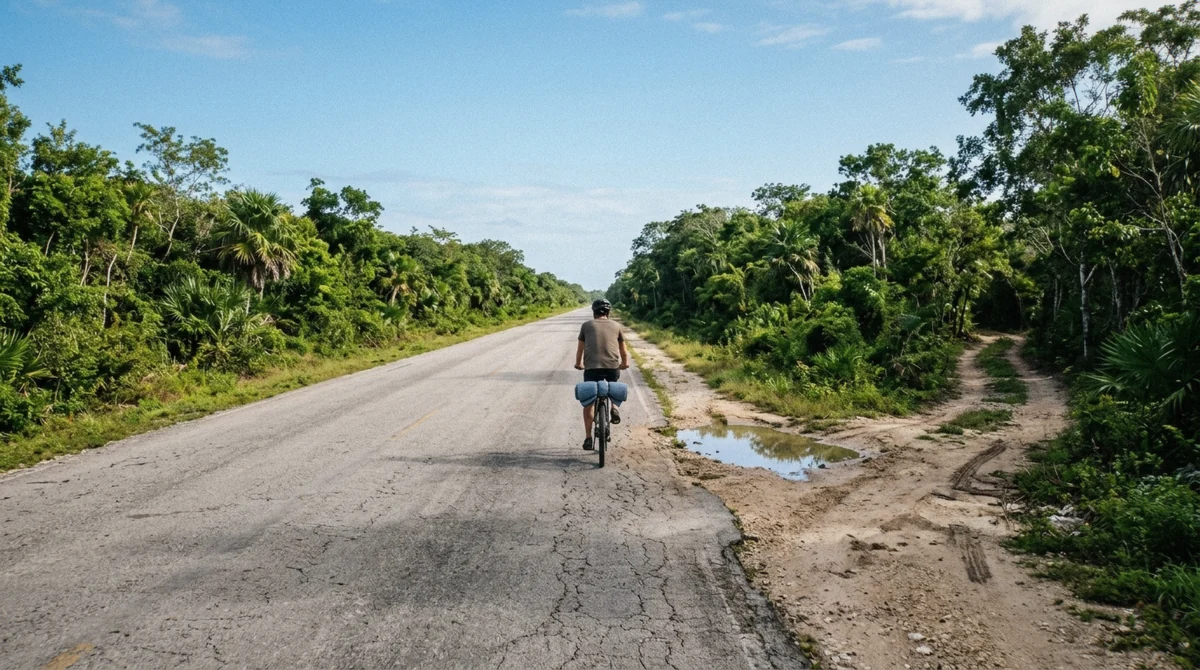
Gran Cenote is four to five kilometres northwest of Tulum town, with Cenote Calavera closer in and Zacil-Ha a little beyond. Colectivos run this road for MX$30 to MX$50 and drop at the entrances; a rented bike costs MX$150 to MX$250 a day and covers the distance in 20 to 35 minutes on a road with far less traffic than the highway.
This is the one stretch where doing it yourself is genuinely easy. Two cenotes and back, no car, half a day.
The Highway 307 cenotes
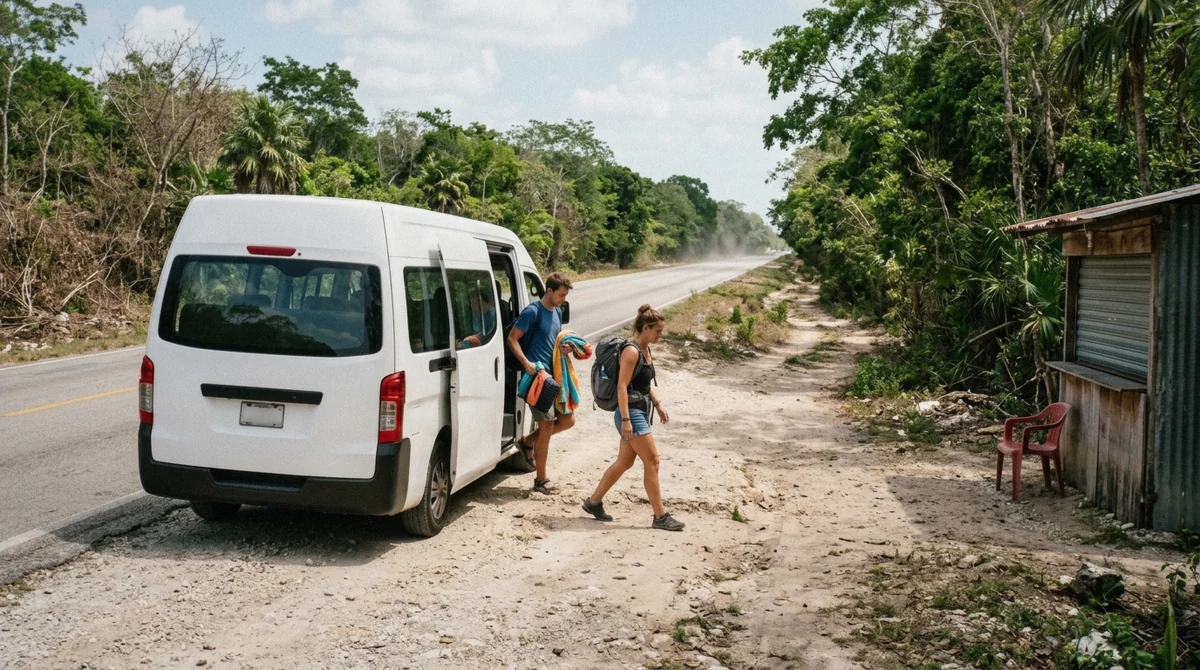
Casa Tortuga sits at km 239 and Parque Dos Ojos at km 244, both north of town. Colectivos run the 307 constantly at about MX$40 per person and stop when flagged, but they leave you on the shoulder: Casa Tortuga's entrance is at the road, while Dos Ojos is roughly two kilometres in along a dirt track you walk or ride on a bike rented at the gate.
Casa Cenote is the same road, about fifteen minutes north, in the Tankah Tres area.
Taxis, and the return-trip problem
A taxi from Tulum town to any of these is straightforward. Getting back is the part people underestimate: there is no rank at a jungle gate, phone signal is patchy, and the driver who agreed to wait sets the price for waiting.
Agree the round trip before you leave town, including the wait, or plan to flag a colectivo on the return. For three or four people a taxi split is often the sensible middle option.
A simple no-car morning plan
Draw pesos in town the night before. Take the first colectivo on the Coba road at around 08:00 and be at Gran Cenote when it opens - the water is clearest and the platforms are empty. Swim for an hour and a half, shower, then flag the next colectivo further out to Zacil-Ha or back to Calavera for a second, cheaper swim.
Be back in town for lunch. That is the whole day, it costs a fraction of a tour, and it works precisely because those two cenotes sit on the quiet road.
When a Tour Is Genuinely Worth It
When you want the caves
Taak Bi Ha, Misterio Maya, Monos and the Sac Actun sections are not open to independent swimmers. The small-group day with lunch swims Taak Bi Ha by lamplight and adds a private underground cenote; the private Sac Actun day is the way into the world's longest surveyed underground river system.
When the gate money is the problem
The cenotes that publish no tariff are the ones that quote MX$150 one year and MX$500 the next. On a prepaid day that is not your risk: the small-group listing states every cenote entrance fee is included, and reviewers keep using the phrase no surprise costs.
The reverse also happens. Two coach trips on this site collect US$40 per adult on the day, so read the fee line before assuming a booked day means a fixed number.
When you are short of time or travelling from Cancun
From Tulum town, a self-guided morning is easy. From Cancun or the Riviera Maya it is three hours of driving before anything, which is why the day trips from Cancun and from the Riviera Maya exist and why they bundle the ruins and the turtle bay into the same day.
When it is your first cenote
A guide is worth the money once, for the same reason a first dive is supervised: you learn what the shower rule is for, why the lamps matter, which water has current and which does not. After that, the Coba road is yours. The rest of the guided cenote days out of Tulum are compared side by side on the home page.
The Casa Tortuga pass at $24 is the cheapest guided version of that lesson.
Rules and Safety, Either Way
The rules every gate enforces
Rinse before you get in. No sunscreen or repellent on your skin in the water; biodegradable only, applied afterwards. No glass. Life jackets where the park issues them. These are aquifer-protection rules, not formalities, and staff turn people back.
At Casa Cenote there is one more: a resident crocodile. Keep distance, never feed or provoke wildlife, and be aware the municipality began drafting rules for crocodile cenotes after an incident in May 2026.
What can go wrong on your own
Wet limestone steps, deep water where you expect shallow, and cold that surprises people at 24 to 25 degrees after a 30-degree morning. Cave entrances are roped for a reason and swimming past a line is how genuine accidents happen.
No cash point at the gate is a practical hazard of its own. So is the last-entry time: Dos Ojos stops selling at 15:30, Gran Cenote at around 16:15.
If you cannot swim
Most cenotes will still take you. Life jackets are issued at the parks, the open cenotes have shallow marked areas and Casa Cenote has banks you can stand on. What is not for you is the lamp-lit cave swim or a cavern circuit.
Say so at the gate or to the guide. It changes which parts of the day you do, not whether you can come.
Visiting Cenotes Without a Tour: Questions
Can you visit cenotes without a tour?
Yes for the open cenotes near Tulum - Gran Cenote, Calavera, Zacil-Ha, Casa Cenote, Kaan Luum, Casa Tortuga and the open cenotes inside Parque Dos Ojos all sell entry at the gate. No for the caves: Sac Actun's cave sections are guided-access only, and Parque Dos Ojos states that Misterio Maya and Cenote Monos are not sold as free-swim cenotes.
How much does it cost to visit a cenote on your own?
For two adults on the Coba road, about MX$1,820 to MX$2,400 for a two-cenote day including colectivo fares, gate fees and food - roughly $108 to $142 at September 2026 rates. With a rental car it is cheaper again. The gate fee is the biggest single item and the least predictable, since most cenotes publish no tariff.
How do you get to the cenotes from Tulum without a car?
Colectivo vans. On the Coba road they cost MX$30 to MX$50 and drop at the entrances of Gran Cenote, Calavera and Zacil-Ha. On Highway 307 they cost about MX$40 and stop on the shoulder - at Dos Ojos the gate is a further two kilometres in. Bicycles rent for MX$150 to MX$250 a day and suit the Coba road.
Why do cenotes close at 5?
Because admission stops earlier than closing. Parque Dos Ojos runs 08:00 to 17:00 with last entry at 15:30 so everyone gets 90 minutes; Gran Cenote's last entry is reported at about 16:15. There is no lighting over the pools, the limestone is wet, and guides need daylight to count people out of a cavern.
Can I visit a cenote if I can't swim?
Usually yes. Life jackets are issued at the parks, the open cenotes have marked shallow areas and Casa Cenote has banks within standing depth. The cave and cavern circuits are the exception - those need confidence in deep water with a roof overhead. Tell the gate or the guide before you start.
Is it cheaper to do cenotes yourself?
With a car and two people, clearly yes. Without one it is close: colectivo fares plus two unpublished gate fees land within reach of a mid-priced guided day that also includes transport, gear and the cave cenotes you could not enter alone.
Do you need to book cenotes in advance?
Only Parque Dos Ojos sells timed tickets online, and even there walk-ups are normal outside peak weeks. Everywhere else you pay at the window in cash. What matters more than booking is arriving in the first hour, and remembering that the gates stop selling entry long before they close.